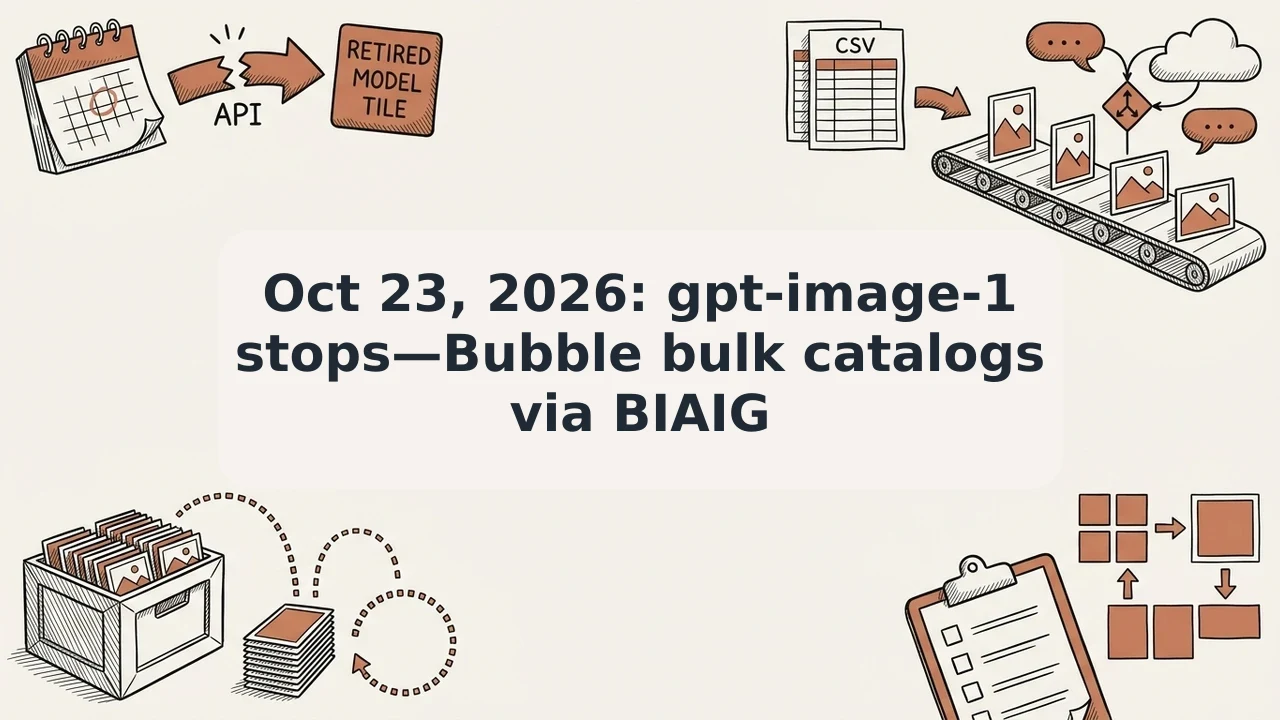
gpt-image-1 sunsets 23 Oct 2026: migrating Bubble bulk catalogs to gpt-image-2 with BIAIG
OpenAI shuts down gpt-image-1 on 2026-10-23—requests with that model id will fail at the API. A deadline-driven checklist for Bubble production bulk catalogs via BIAIG: prompt templates, aspect ratio mapping, batch/post-batch QA, and what to keep in storage so CSV-chunk jobs keep running.
Why now
OpenAI lists gpt-image-1 shutdown on 2026-10-23 (Deprecations). After that date, calls that still send the gpt-image-1 model id should fail at the API; assets already stored outside OpenAI are not removed by the deprecation itself (Image prompting guide).
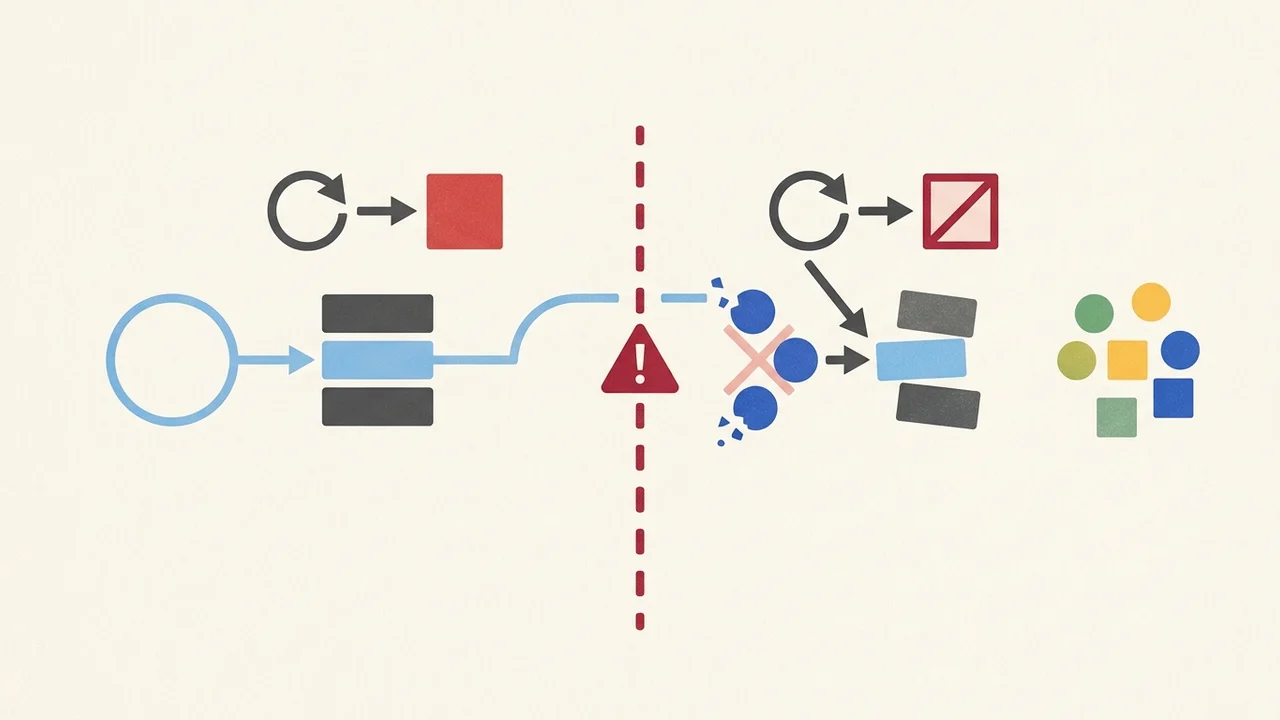
If you run production bulk catalogs in Bubble—CSV chunks, async polling, optional batch queues—this is a deadline-driven cutover for your orchestrator. In this editorial thread that orchestrator is BIAIG between Bubble workflows and providers. Scout found no public docs under the name “BIAIG”; the checklist below is grounded in OpenAI’s migration guidance plus common async gateway patterns (e.g. Buble GPT Image 2). CSV-chunk column specifics are not publicly documented—validate against your internal inventory. A closer look: Mixboard offline on 28.09: exporting. Worth reading next: BulkImagen async batches with nano-banana-2-1:. A closer look: Mixboard offline on 28.09: exporting.
Official replacements include gpt-image-2.5-sunburst (quality) and gpt-image-2.5-flare (speed); guides also center gpt-image-2. Confirm which ids BIAIG exposes in production before you regen the full catalog.
What breaks on 2026-10-23
Audit every path that still defaults to gpt-image-1:
- BIAIG / backend workflow defaults;
- prompt templates with embedded model fields;
- CSV import mappings;
- retry logic that re-submits the old id.
Rows that already point at durable Bubble/S3/CDN blobs do not require regen for API continuity—only new generations break.
Parameters: not a one-line model swap
GPT Image 1 (gpt-image-1) |
GPT Image 2 / 2.5 |
|---|---|
size: 1024x1024, 1024x1536, 1536x1024, auto |
auto or custom WIDTHxHEIGHT (16px grid, aspect between 1:3 and 3:1, max edge 3840px) |
optional input_fidelity |
no input_fidelity—high fidelity is implicit (Image prompting) |
If BIAIG (or a gateway such as public openai/gpt-image-2) uses aspect_ratio and resolution (1K/2K/4K) instead of raw OpenAI pixel sizes, build an explicit legacy size → aspect + resolution table and re-check downstream CSV consumers (thumbnails, crops, print layouts).
GPT Image 2.5 adds gpt-image-2.5-flare / gpt-image-2.5-sunburst and extended quality tiers including xhigh/max—that changes cost, latency, and QA bars, not just the model string.
Migration checklist (Bubble + BIAIG)
1. Inventory
- Export active prompt templates and reference images used in edit chains.
- Classify jobs: synchronous API vs OpenAI Batch for
/v1/images/generationsand/v1/images/edits(Batch API: ~50% lower cost vs sync, up to 24h completion, often faster) vs BIAIG async poll (create task → poll until terminal state—see Buble API overview). - Note where CSV chunks store provider URLs vs durable blobs—Bubble image plugins illustrate URL expiry risk separate from model shutdown. Worth reading next: GPT Image 2.5 at 250. A closer look: BulkImagen SKU templates and POST.
2. Baseline and locked dimensions
Follow OpenAI’s published workflow (Image prompting guide):
- Lock a reference set of prompts and edit references.
- First comparison run uses fixed dimensions/format.
- Post-batch QA: instruction following, text legibility, identity/product geometry, transparency alpha, multi-step edits.
In Bubble, run a small migration QA CSV chunk (tens of rows), not the full catalog.
3. Prompt templates
- Remove
input_fidelitydependencies; rewrite prompts that assumed v1 fidelity toggles. - Expect visual drift on bulk regen even with identical prompt text.
- Version templates: store
prompt_template_versionandmodel_idon chunk metadata for partial rollback.
4. Aspect ratio and layout-sensitive SKUs
- Map
1024x1024→1:1+ chosen resolution; portrait/landscape legacy sizes →9:16/16:9(verify on QA—do not assume letterboxing matches v1). - SKUs with strict downstream crops are prime candidates for mandatory regen after size policy changes.
5. Regenerate vs keep in storage
| Action | When |
|---|---|
| Keep existing blob/URL | Durable storage; CSV metadata still valid; no v1-only edit chain |
| Regenerate | Missing asset, dead URL, critical text-in-image, PNG alpha, compliance-sensitive product geometry, edit chains tied to v1 |
| QA only | Model changed but pixel drift acceptable for that SKU—product decision |
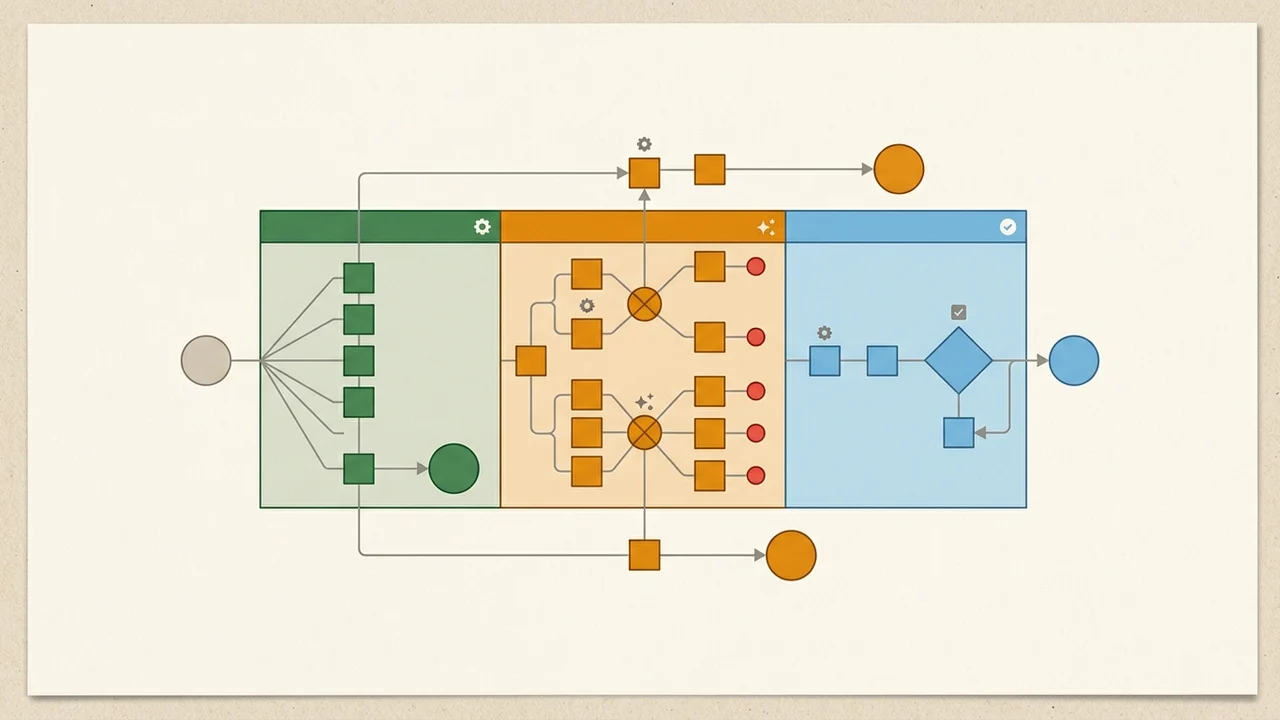
Avoid stopping jobs: use a pending_migration row state until staging confirms the new model path.
6. CSV-chunk continuity
No public spec for your chunk format—minimum contract:
- Idempotent chunks (
chunk_idreruns do not double-upload). - States:
queued→provider_pending→stored→qa_pass|qa_fail. - After cutover, never retry failed rows with
model=gpt-image-1without updating the mapper.
If chunks assume sync completion but migration uses Batch or gateway polling, add timeouts and backpressure to prevent deadlocks.
7. Throughput and verification
- Documented IPM limits on
gpt-image-2(e.g. low tiers) can stall bulk CSV jobs. - Batch uses a separate rate-limit pool and the documented ~50% batch discount (Batch API).
- Confirm Organization Verification for GPT Image models before peak load (Image generation).
8. Rollout
- Staging: BIAIG on target
gpt-image-2or 2.5 id + QA chunk. - Production: canary slice or new-SKU-only pipeline.
- Complete cutover before 2026-10-23 with alerts on API failures mentioning deprecated model ids. A closer look: The ~500-row bulk-tools ceiling in.
Open questions (resolve before cutover)
- What is BIAIG in your stack (plugin, gateway, direct OpenAI, hybrid) and where is model catalog versioning documented?
- Target
gpt-image-2only (as in Buble public docs) or official 2.5 flare/sunburst, and is 2.5 available through BIAIG today? - Does “batch discount” mean OpenAI Batch API or BIAIG/gateway credits (Pricing vs per-image gateway credits)?
Sources
OpenAI: Deprecations, Image prompting, Batch API, GPT-Image-2, Image generation, Pricing. Gateway/async context: Buble, Bubble plugin pattern. Cross-check: Community deprecation notice.