SenseNova U1 Pro and 8K API: a high-res bulk route for Bubble catalogs via BIAIG
When to add a vendor-claimed 8K tier in your bulk image gateway (BIAIG) versus staying on 1K–4K for feeds; Bubble storage, downstream resize for Google Merchant 500×500, and IPTC without regenerating the whole catalog.
Context
SenseNova U1 Pro (SenseTime) appeared in the digest as a production image model with interleaved text–image reasoning, readable text/layout focus, custom aspect ratios, and vendor-claimed native output up to 8K. Channels named in announcements: Raccoon (商汤小浣熊) and SenseNova / 日日新 API (enterprise whitelist via [email protected]).
Honest take on 8K: public OpenSenseNova-U1 reference code documents ~1K/1.5K/2K buckets only; independent Studio reports cite up to 4K. Scout found no primary public docs for exact pixel dimensions, 8K API fields, pricing, or latency. Treat “8K” as a vendor specification until API/schema evidence exists. If the real long edge is not materially above ~3840–4096 px peers, a dedicated route is about workflow and access—not literal 7680×4320 UHD superiority.
In the same high-res bulk route frame (alongside GPT Image 2.5, Gemini Nano Banana 2, Tencent Hy Image), U1 Pro is a fourth/fifth routing option. Focus here is resolution tiering, not model benchmarks. Worth reading next: Gemini Nano Banana 2 for. Worth reading next: Gemini Nano Banana 2 for.
BIAIG in this methodology
BIAIG is your working label for a bulk image gateway in the Bubble stack (async POST generations + polling). A publicly documented parallel is buble.ai (POST /api/v1/generations, resolution at request root; live catalog via GET /api/v1/media_models). Do not equate BIAIG with buble.ai without internal confirmation. SenseNova U1 Pro was not listed in reviewed static aggregator docs; verify resolution enums in production catalog before routing traffic. Same topic: Tencent Hy Image 3.5 Preview. Same topic: Tencent Hy Image 3.5 Preview.
Documented peer caps (not quality benchmarks):
- openai/gpt-image-2 (GPT Image 2.5 ecosystem): up to 3840×2160, max edge 3840 px—4K-class, not literal 8K UHD.
- google/nano-banana-pro (Gemini Nano Banana 2): 1K / 2K / 4K in gateway docs.
- Tencent Hy-Image-3.5-Preview: up to 4096×4096 via explicit size.
U1 Pro earns a separate tier only if claimed 8K yields a larger master than 4K competitors and your pipeline can store and derive from it without re-generation.
Tiering: hero assets vs feed thumbs
| Layer | Typical resolution | Where it lives | Why |
|---|---|---|---|
| Feed / listing thumb | 1K–2K (or downstream ≥500×500) | Bubble CDN transforms | Speed, transfer, storage |
| Hero / zoom / print-adjacent | 4K or claimed 8K (after API proof) | Bubble file original or external object storage | One master → many derivatives |
| Google Merchant image_link | ≥500×500, no upscaled thumbs | Exact crawled URL | Enforcement from 2026-01-31 |
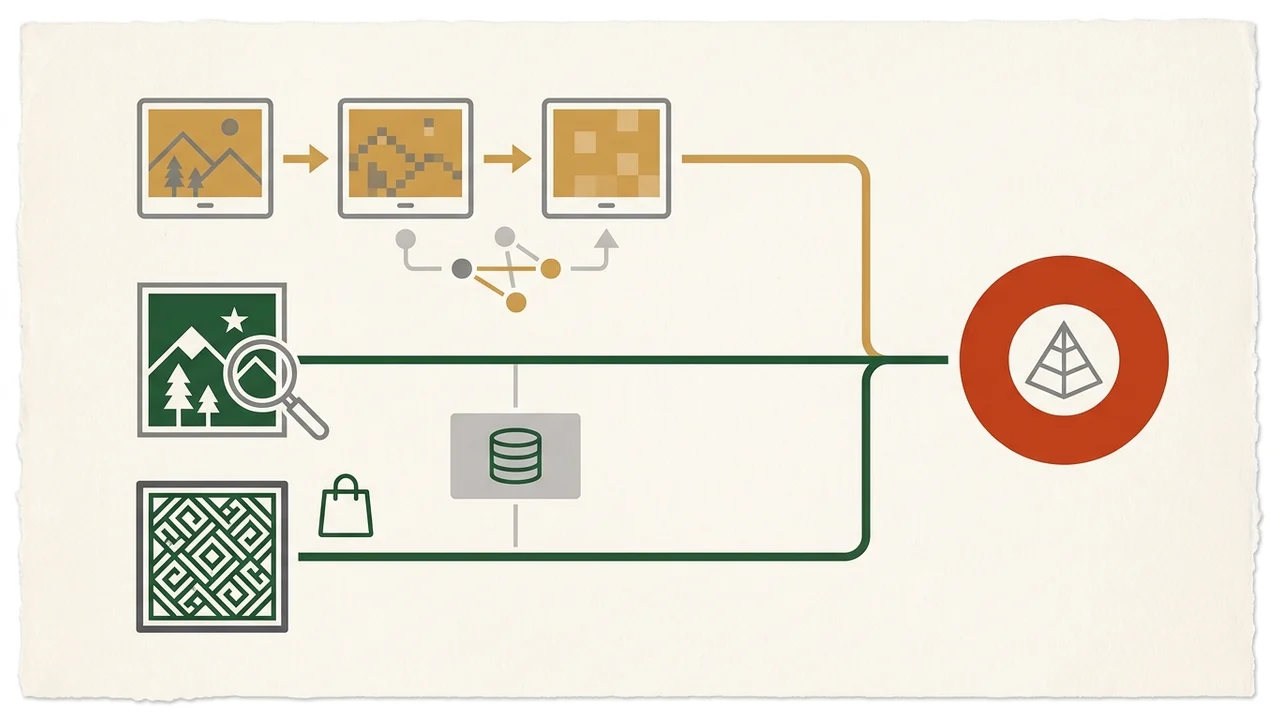
Do not generate the entire catalog at 8K “for the future.” Bubble stores full-size originals on upload; the CDN caches a bounded resize ladder (~10 variants per image per Bubble manual). Bulk 8K masters inflate storage and bandwidth—an operational trade-off, not proof of model quality. Same topic: Qwen-Image-2.1 before 28.09 UTC+8: freeze. A closer look: 29 Oct 2026 Nano Banana.
Practical rules:
- SKU feed thumbs — cheapest tier that is natively ≥500×500 (often 1K/2K via BIAIG).
- Hero / lifestyle / additional_image_link needing crop headroom — 4K; U1 Pro 8K only for SKUs with confirmed ROI (print, large lifestyle, B2B assets).
- Downscale from master to Merchant minimum is fine; upscaling low-res outputs is explicitly discouraged by Google.
Google Merchant: 500×500 and IPTC without catalog re-generation
AI-generated product images must carry IPTC DigitalSourceType (typically TrainedAlgorithmicMedia) on URLs in image_link / additional_image_link / lifestyle_image_link. OpenAI’s image API emphasizes C2PA/SynthID—that is not a substitute for IPTC under Google’s stated rules.
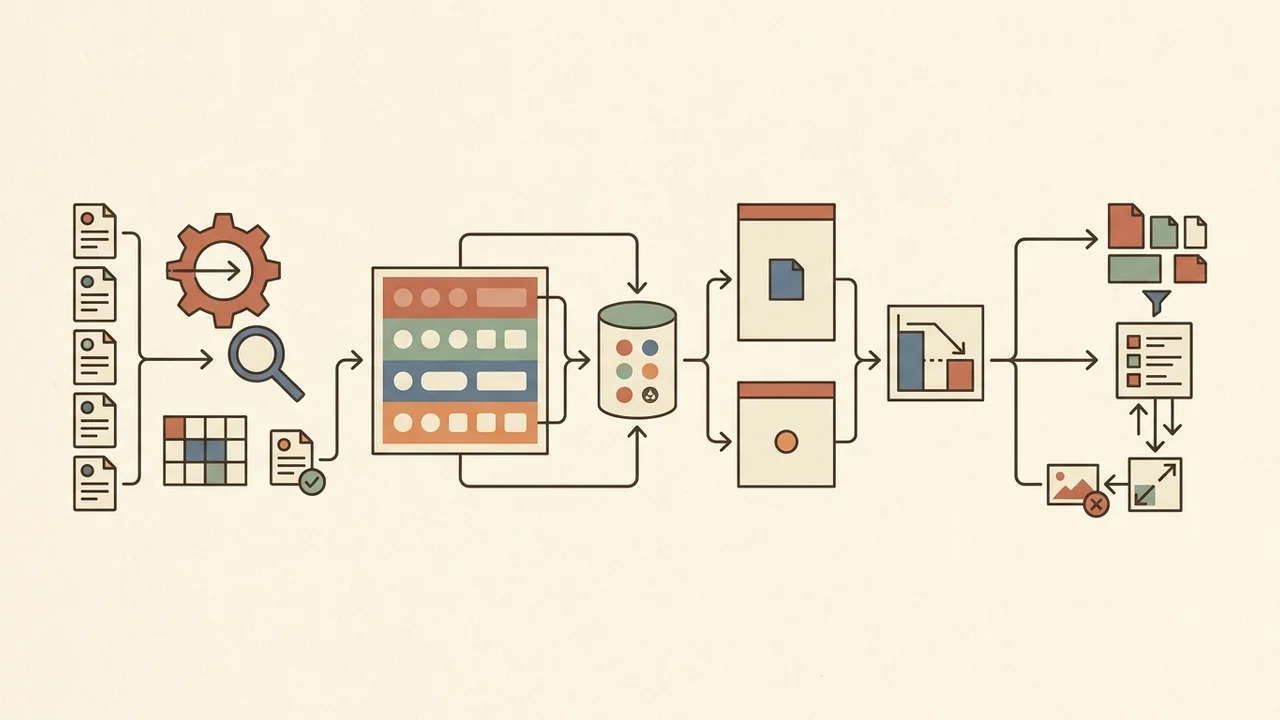
Workflow without re-running the generative model on every SKU:
- Store the high-res master once (4K/8K after verification).
- Derivative pipeline: resize/crop to feed + Merchant (≥500×500) from the master.
- Metadata pass on the exact URL submitted to the feed (ExifTool / IPTC pattern for
trainedAlgorithmicMediain XMP-iptcExt). - Re-verify after CDN/hosting—metadata stripping on commerce CDNs is a known compliance risk; confirm readable DigitalSourceType on the crawled URL (Bubble-specific behavior: verify in your environment).
Which URL is canonical for Merchant (Bubble file vs CDN transform vs external storage) is a project-level open question; policy binds to the crawled URL, not the row in your database.
When to add the U1 Pro 8K route in BIAIG
Add when:
- Live catalog/API shows a resolution tier above 4K and sample outputs confirm pixel dimensions.
- A defined SKU subset (hero/lifestyle) justifies master storage cost.
- Metadata pipeline is ready: IPTC on Merchant URLs, not provider provenance alone.
Defer when:
- You only need Merchant-minimum 500×500—1K–2K bulk is cheaper and lighter in Bubble.
- SenseNova remains whitelist/geo-gated while GPT/Hy/Nano Banana cover 4K globally.
- No evidence that “8K” is more than marketing shorthand above reported Studio caps.
Bubble developer checklist
- Catalog truth:
GET /api/v1/media_models+ one-SKU test generation. - Tier map in DB:
resolution_tier(thumb | feed | hero | merchant_derivative) + provider model id. - Storage budget: MB/SKU for 8K originals vs 2K before bulk import.
- Merchant: derivatives ≥500×500 from master; IPTC on submitted URLs; no upscale from thumbs.
- Internal docs: label 8K as claimed until primary API documentation is cited.
Open questions (resolve in prod, not in prose)
Exact U1 Pro 8K API fields; IPTC on SenseNova bulk export; 8K vs 2K/4K cost/latency; 8K master economics on your Bubble plan.
Source-bounded: TechNode/Sina announcements; OpenSenseNova GitHub client; NetEase Studio hands-on; buble.ai generations docs; OpenAI/Google/Tencent public caps; Google Merchant product spec + AI content; Bubble images manual; IPTC ExifTool guidance — see Scout packet.