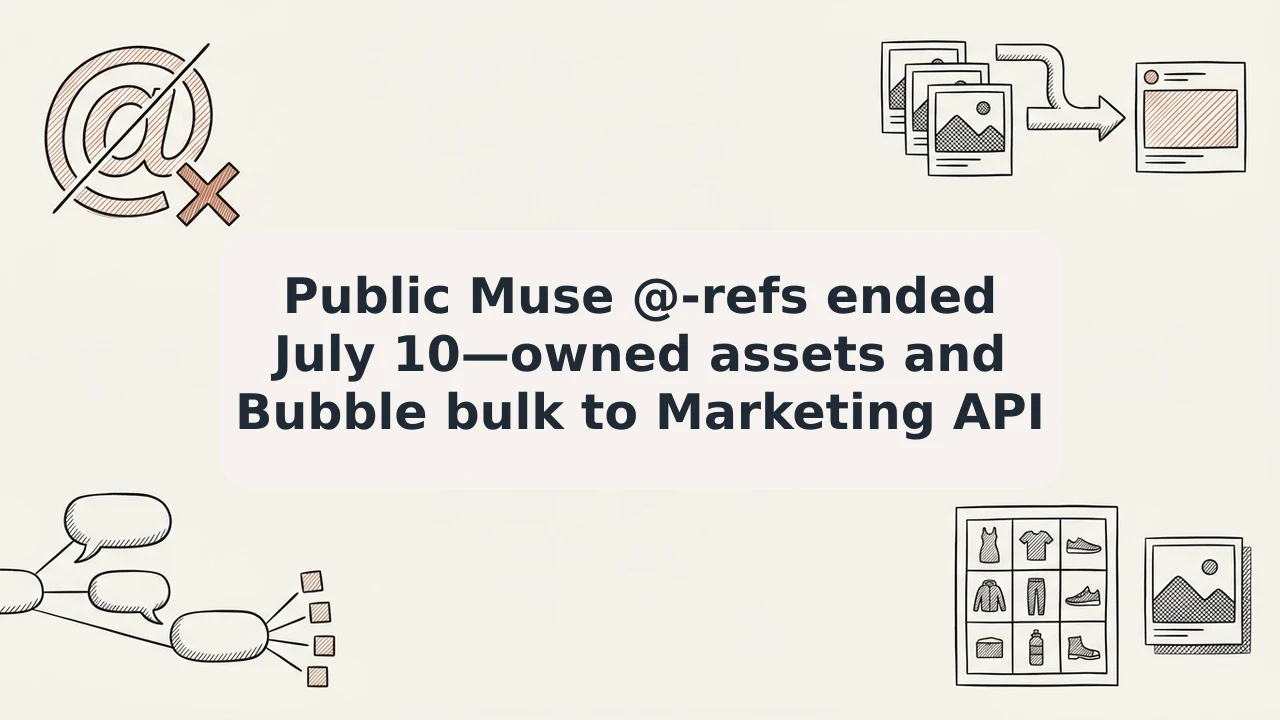
Meta Muse / Instagram (Oct aggregators) and @-ref: bulk ad variants in Bubble via BIAIG after 10 July
October syndicated headlines are not a new cutover—public Instagram @-mentions in Muse Image ended 10 Jul 2026. What to move into owned-reference pipelines via Meta Model API or fal, and how to wire Bubble bulk orchestration (BIAIG) to Marketing API for catalog and ad variants.
Three topics—do not conflate them
- 10 July 2026 — Meta removed consumer-only @-mention of public Instagram accounts to pull photos into Muse Image generations. Muse Image, other Instagram AI surfaces, and advertiser/developer paths remain (Meta newsroom, update 10 Jul 2026).
- Ad and dev pipelines — the replacement is not another Instagram handle hook; it is reference images you control (URLs, uploads, brand kits) via Meta Model API (
/v1/images/generations,/v1/images/edits, Responses API) or the same model on fal (Meta documents ~$0.01/image positioning). - ~5 October 2026 digest “aggregators” — republication of the July @-ref story, not a new “5.10” Meta launch or extra cutoff. Instagram Muse personal agent (8 Sep 2026, creators.instagram.com) is a different product from Muse Image. A closer look: Meta @-reference removal: migrating ref. A closer look: Meta @-reference removal: migrating ref.
If your Bubble workflow still assumes @-ref, it has been broken since 10 July. The job now is migration, not “beat a July deadline.”
What to move out of @-ref pipelines
| Before (consumer) | Production target |
|---|---|
| @username → someone else’s profile photos | Your storage URLs/uploads, licensed refs, catalog stills |
| Implicit third-party consent | Explicit asset control + ad policy / likeness risk |
| Single Stories UX | Bulk N variants → image_hash / image_url in Ad Creative |
Meta positions ad variant generation and catalog imagery at scale on developer.meta.com and fal—that is your path, not consumer @-mentions.
Architecture for Bubble builders
Layer A — generation (Muse Image)
- Meta Model API if you already run Meta dev billing/compliance.
- fal Muse Image if you want straightforward HTTP batching and pay-per-image.
- Both require you supply references; Instagram handles are not coming back as an API input.
Layer B — Bubble orchestration (BIAIG — editorial inference)
No verifiable public “Bubble + BIAIG + Meta” docs in the scout packet—treat this as an internal pattern to validate:
- Job table/CSV:
product_id,variant_key,prompt,ref_asset_urls[],target_ratio,locale. - API Connector / backend workflows: batched fal or Meta
/v1/images/*with rate limits and retries. - Persist outputs to your storage with metadata (hash, dimensions)—do not treat Instagram as your ref CDN.
- Idempotency keys so reruns do not duplicate live creatives.
Layer C — Meta Ads publish
- Upload →
image_hashorimage_urlon Marketing API Ad Creative. - Instagram-specific assets via
platform_customizations(see Ad Creative reference). - Catalog/dynamic uses separate Generative AI features (
image_background_gen, eligible catalog automation)—not arbitrary @-ref semantics.
Separate from Muse @-ref: Marketing API OCC 2026 (e.g. Reels audio, poll creatives)—scope that checklist independently.
Advantage+ Muse inside Ads Manager
Meta’s business narrative promised Muse in Advantage+ creative “in the coming weeks” from July 2026; through late September 2026 scouts found no firm all-advertiser GA confirmation. For bulk variants I would run my own Meta API or fal batch + Bubble (BIAIG) rather than wait on in-platform Muse timing. Worth reading next: Imagen 3 GA endpoints discontinued:. Worth reading next: Imagen 3 GA endpoints discontinued:.
Practical cutover checklist (October 2026+)
- Audit Bubble apps for lingering “Instagram @” in prompts, plugins, or data fields.
- Move refs to owned uploads/URLs; drop third-party profile pulls.
- Pilot: one SKU → N variants → one test ad set → verify
image_hashand IG placement preview. - Catalog: align product media/tags with dynamic eligibility—otherwise in-platform gen AI may reject or swap assets (field-level mapping is workflow-specific; see Marketing API gen AI docs).
- Treat “Muse 5.10” aggregator headlines as noise; the verified @-ref policy date is 10 Jul 2026 only.
Honest limits
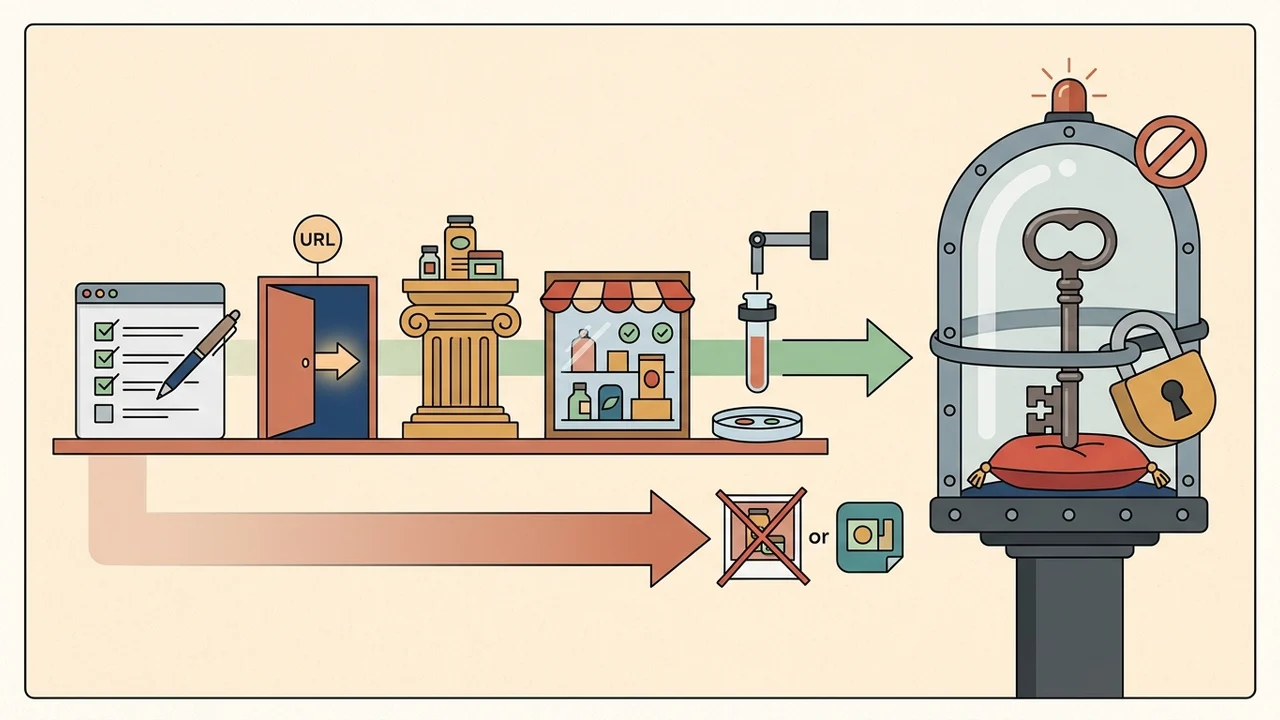
- Contractual rights for paid-ad use of API/fal outputs (Content Seal, etc.)—not fully answered in this scout set; run legal + Meta ad policy before scale spend.
- BIAIG auth, batch caps, and
image_hashhandoff—verify internally; not sourced from public Meta/fal documentation.
Short version: October aggregators resurfaced an old story. Builder work is owned references + Muse via Meta API or fal + Bubble bulk (BIAIG) → Marketing API creatives, with catalog on its own gen-AI eligibility rules.