Meta @-reference removal: migrating ref pipelines for bulk generation in Bubble before July
Meta dropped public Instagram @-mentions as Muse Image references in July 2026—not September Marketing API deadlines. A practical Bubble/BIAIG checklist: audit prompts, use explicit image_urls, version templates, define fallbacks.
What changed (and what did not)
In July 2026, Meta launched Muse Image in Meta AI and, within days, removed the ability to @-mention public Instagram accounts as visual references. Meta’s July 10, 2026 newsroom update states that @-mention reference is “no longer available”; Muse Image generation/editing on related surfaces continued. Reuters, BBC, and TechCrunch describe the same short launch → backlash → removal arc; public sources cite no re-enable date.
This is consumer Meta AI policy, not the contract for bulk inference via fal or the Meta Model API. Separately, September (e.g. 2025-09-09) Graph/Marketing API v22 migration deadlines exist—if a digest conflated “September” with @-reference removal, ref-pipeline work will be misprioritized. For Bubble bulk orchestration, treat @-removal as regression risk in prompt templates that fal-catalog articles about image_urls alone may not cover. Worth reading next: Meta Muse Image on fal. Same topic: Meta Muse / Instagram (Oct.
How this maps to fal + Bubble bulk
Typical fal catalog paths for Meta Muse:
meta/muse-image/text-to-image— largely prompt-only; references are not the primary catalog flow.meta/muse-image/edit— requiresprompt+image_urls(1–10 HTTP(S) or data URLs); no Instagram @-handle field. Worth reading next: Meta Muse Image on fal.
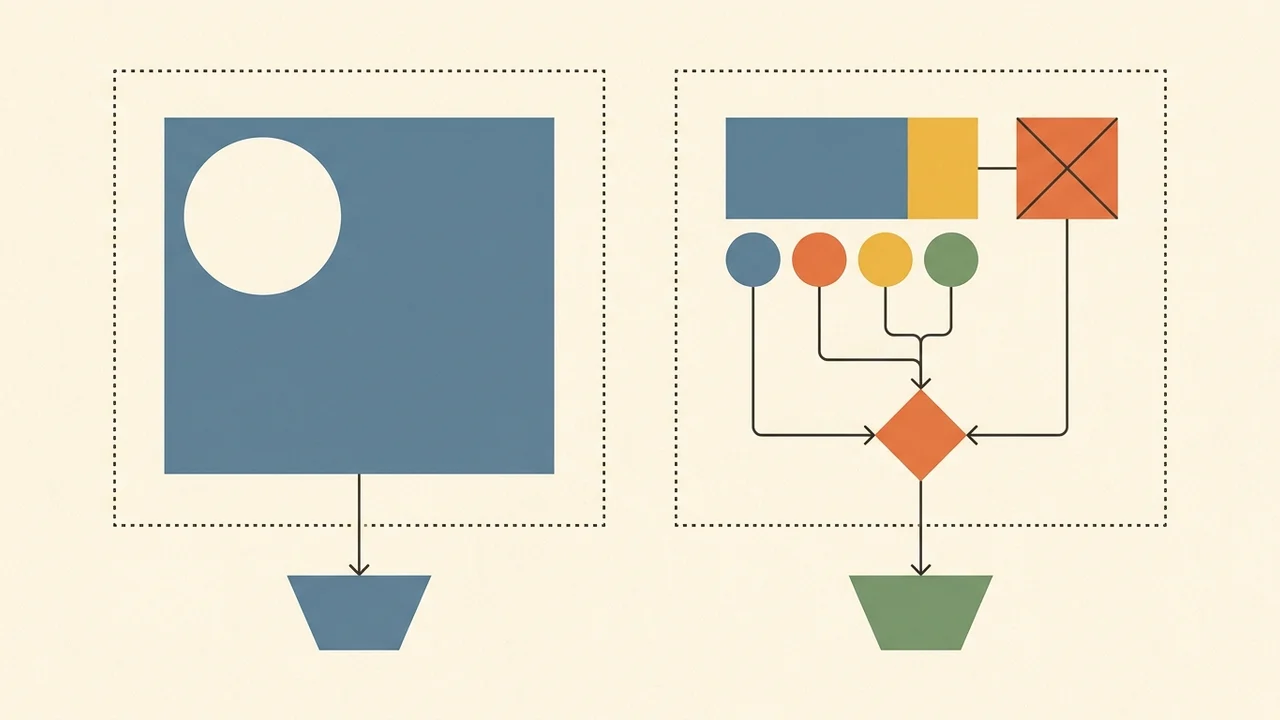 A closer look: Mixboard offline on 28.09: exporting. A closer look: Mixboard offline on 28.09: exporting.
Meta Model API developer docs (Aug 2026) describe references via uploads/URLs and conversational interleaved images on /v1/images/generations and /v1/images/edits—no documented @instagram_handle resolution in prompts. Marketing API generative features and Ads Manager use uploaded/eligible assets, not the Meta AI @-mention workflow. A closer look: Midjourney litigation 2026: vendor risk.
Builder takeaway: if your BIAIG/Bubble pipeline copied Meta AI prompts with @brand_account, you may have relied on behavior never guaranteed on the API layer—and already removed on the consumer layer.
Migration checklist (Bubble + BIAIG ref pipelines)
1. Inventory (before the next bulk run)
- Export all catalog rows, prompt templates, API Connector bodies, and Custom events containing
@+ handle or “Instagram reference” wording. - Flag rows where the ref lives only in the prompt with no parallel
image_urls(fal edit) or File/URL asset in your database. - Split production vs draft templates; include legacy copies in scheduled/backend workflows.
- Record which endpoint each row uses (
text-to-imagevsedit)—missing URLs on edit fail validation, not silently at generation quality.
2. Replace @-reference with explicit assets
- For each former
@handle, maintain an owned or licensed anchor image (CDN, Bubble file, object storage) cleared for bulk generation. - On fal
meta/muse-image/edit, passimage_urlsexplicitly; keep the prompt for style/composition, not identity via handle. - For brand/product likeness without IG: a versioned anchor set (front, packshot, logo-safe)—aligned with Meta developer “anchored composition” patterns, not one-off @ mentions.
- Do not assume automatic web/visual grounding fully replaces intentional refs without output review (equivalence to removed IG @ is not established in public docs).
3. Version catalog / prompt templates
- Add
template_version,ref_set_id,model_route(e.g.muse/editvsmuse/t2i) on catalog things. - When the anchor set changes, bump version—do not silently overwrite rows used in past jobs.
- Store sample outputs (thumbnail + date) to compare post-migration; Muse outputs are non-deterministic.
- Internal changelog: “v3: removed @handle; refs = catalog_asset_ids […]”.
4. Fallbacks when refs no longer resolve
Define behavior in orchestration, not “hope the model understands”:
| Situation | Suggested fallback |
|---|---|
Missing image_urls for an edit row |
Skip row + log; do not fail the whole batch |
Prompt still contains @ after sanitization |
Block or strip + flag for human review |
| Edit route unavailable / quota | Alternate route (text-to-image without ref) only if brand allows generic output |
| Off-brand output | Human-in-the-loop or retry with a different anchor set |
In Bubble: dedicated error branches in backend workflows, a bulk_job_row_status table, operator notifications.
5. Minimum regression checks
- 3–5 golden rows with known anchor URLs—compare before/after migration (visual review, not just HTTP 200).
- A legacy row with
@handlein the prompt—ensure the pipeline does not pass silently (ignore vs degrade behavior is unverified without live API tests). - Run scheduled bulk on staging with the same fal key and timeouts as production.
Compliance (separate from Meta policy)
Removing @-reference does not remove likeness/content rights for bulk work. Migrating to explicit URLs is also a license audit if refs previously implied public Instagram content.
Open questions (explicit)
Without your production config and live API tests, it is unknown whether your stack ever resolved @ via Meta (vs fal URLs only); whether fal/Meta strip or ignore @ in prompts; or whether Meta will reintroduce account referencing with stricter consent. Plan migration as already relevant risk (July 2026 event), not “maybe in September.”
Sources (scope of this piece)
Meta newsroom (Muse Image, July 10, 2026 update); Reuters, BBC, TechCrunch (July 2026); Meta Model API / Build with Muse Image; fal meta/muse-image/edit and text-to-image; Graph/Marketing API v22 (September 2025—distinct timeline); Marketing API generative features; Meta Ads Manager help (asset-based reference).